Are You Licensed For Short Term Medical Missions?

April 29th, 2011 Posted in INMED | No Comments »

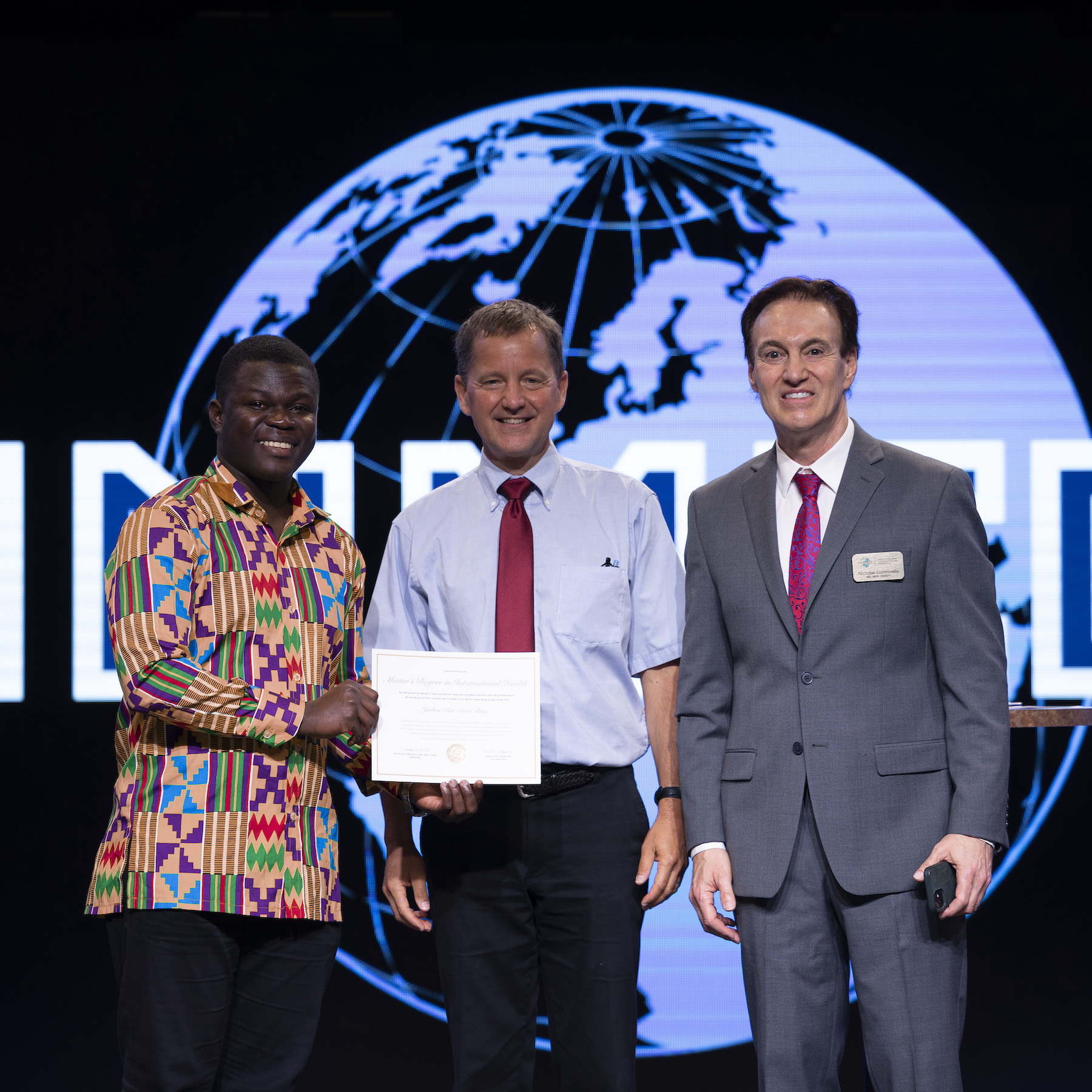
ghana-medical-dc-certificate-530.jpg“In Haiti over eight days we saw 900 patients, treating infections and diarrhea. The people are desperately poor and were so very grateful for the medical care.“ This young physician spoke with enthusiasm. But then his voice turned somber, describing how the police arrived to investigate the credentials of their medical missions team.

Practicing our healthcare professions in a foreign country without a license in THAT country is very likely to be illegal. Healthcare professionals must comply very carefully with licensure requirements of host nations, who rarely offer exemption simply because we may be providing free care or aid for the poor. Serving under the authority of a licensed national practitioner may be sufficient, but healthcare professionals must be diligent to verify this fact. Complying with national licensure requirements not only prevents legal complications, but is also a strong symbol of  respect for the host nation and the ethical practice of healthcare professions.

How would you go about getting properly licenses in the nation where you volunteer? Begin by contacting your national partners in that nation. They are usually the ones with greatest interest in assisting you and with greatest insight into negotiating the requirements and procedures for proper licensure.

Make A Lasting Contribution: Teach Your Skills

April 5th, 2011 Posted in INMED | No Comments »

Teach Your SkillsHow can you and I contribute to lasting care and progress in the world’s most impoverished communities – like sites in northern Ghana, urban India, or rural Papua New Guinea? Clearly our efforts to support basic literacy and economic development are foundational. Equipping local citizens is one of the most effective ways to make a lasting improvement on communities in distress. Several reputable programs are doing just this: Helping Babies Breath of the American Academy of Pediatrics teaches newborn resuscitation for midwives and birth attendants in low-resource settings. Heifer International provides training in livestock and agricultural management to boost economic development in low resource communities. International Literacy Institute  is a headquarters for worldwide movements to promote reading skills in developing nations.

Let’s join organizations like these in moving beyond simply providing care and towards building resiliency in local health care providers. Someday one of them may benefit a life because you taught your skills!

Rescue Has Limitations

March 18th, 2011 Posted in INMED | No Comments »

Sinking FiretruckDisasters and epidemic disease continue to mark this new century: Haiti’s earthquake, Pakistan’s flood, measles’ blight, and Zimbabwe’s cholera. The title waves in Japan last week are the most recent reminder of life’s vulnerability. The heartening response from many is to donate personal time, talent, and treasures to provide rescue and assistance to those in distress. But rescue alone has significant shortcomings: Most crises are far easier to prevent, rescue is costly, repeated & predictable rescue is shortsighted.

We must move beyond the rescue mentality and pursue those interventions that actually build more resilient communities. In the case of the world poorest communities, these interventions often include economic development, improvements in basic literacy, and proven effective health interventions like adequate nutrition, safe drinking water, reproductive health, vaccination, injury prevention, and well child care. We must also invest into equipping local healthcare personnel to provide for their own.

Image Worms Living Under Your Skin!

February 18th, 2011 Posted in INMED | No Comments »

FiliriasisAs a resident physician I spent a summer in Burkina Faso - an impoverished nation in West Africa. For years a group of nurses with SIM (Serving In Mission) had been living on site, providing community health and clinic care in this remote, hot, and culturally distinct community. As I attended to ill patients, I noticed many with unusual nodules just under the surface of their skin - like the boy’s scalp in the photo above. A novice to such finds, I anesthetized the boy, incised his nodule, and out fell a white worm two feet long!!

This was a ghastly introduction to onchocerciasis - a parasitic infection appropriately known as night blindness. The adult worm produce tiny worms (microfilariae) that migrate throughout the body causing inflammation, particularly in the eyes. A prototypical disease of poverty, we have the means to both effectively prevent and treat onchocerciasis. All that’s lacking is the leadership to carry out this worthy pursuit.

Pneumonia Get’s Personal!

January 27th, 2011 Posted in INMED | No Comments »

Childhood Deaths From PneumoniaOne very early morning I heard a quite thump at the door. Opening it, I gazed out on to the little courtyard of my home in Huambo, Angola. Edwardo, a young pastor, stood clutching his four-year old son. The child was gasping and drooling, his little black body darker from cyanosis - insufficient oxygen. A quick listen to his lungs confirmed the obvious. The boy was dying of pneumonia. Oxygen was the first remedy, but none would be found in Huambo. I administered an antibiotic, but it was all too late. Only a few moments later, the boy breathed his last.

Pneumonia remains a ubiquitous killer in poorer nations. Check out the green portion representing pneumonia for each region of the world on the map above. What are effective interventions? Beyond general progress is nutrition, housing, and education, the most important is early recognition and treatment. Had this boy arrived for care even a day earlier he might well be writing blog posts today, just like me.

Polio - An Unnecessary Threat

January 15th, 2011 Posted in INMED | No Comments »

Children crippled from polioAs a kid, I noticed that my cousin Roger walked with a significant limp. He began wearing an elevated shoe to stabilize his gait. This was a result of polio he suffered in the 1950s - a time when the disease was rampant in the United States. Effective vaccines all but eliminated US polio in the 1960s, but it’s still epidemic in 4-5 countries today. The polio-crippled children in this photo at a physical rehabilitation center in Sierra Leone, West Africa.

Since humans are the only living being infected by polio, eradication is indeed possible. Ongoing polio eradication efforts include routine immunization of infants and children, and disease surveillance with vaccination for those missed by other approaches. Assuming that worldwide polio eradication is successful, an important unanswered question is how long wild-type poliovirus can persist in the environment and continue to be a threat, requiring sustained vaccine coverage.

Prevent This Child’s Blindness!

January 1st, 2011 Posted in INMED | No Comments »

Corneal ScarringThis child is going blind as a result of scaring to his cornea. Some 250,000 to 500,000 children in low-resource communities throughout Africa and the Indian subcontinent go blind each year from dietary deficiency of vitamin A. Severe deficiency causes irreversible corneal damage, leading to partial or total visual impairment. Startlingly, about half of these children die within a year of becoming blind - often due to associated protein-energy malnutrition and increased susceptibility to respiratory and diarrheal infections. Vitamin A deficiency also puts children especially increased risk for measles.

What can we do on behalf of children like this? Prevention of vitamin A deficiency includes breast feeding, promotion of vitamin A rich diets, food fortification with vitamin A, and vitamin A supplementation. In communities with vitamin A deficiency children age 6–59 months should receive two doses each year. Vitamin A supplementation is very inexpensive and effective. In 1997 alone, some 300,000 child deaths were prevented by vitamin A supplementation in developing countries. In the case of this child, unfortunately, corneal transplantation is likely the only option to prevent blindness.

Will You Bring ‘Good News’?

December 25th, 2010 Posted in INMED | No Comments »

Angels at ChristmasWhen Bill Gates or Bill Clinton have an important announcement, whom do they call? CNN, FOX, and MSNBC - of course. But when God announced the birth of our Messiah, he chose the lowest people in society - the equivalent of our landscapers and waste collectors - to receive and disseminate the news. Luke 2:8 describes the scene, “And there were shepherds living out in the fields nearby, keeping watch over their flocks at night. An angel of the Lord appeared to them, and the glory of the Lord shone around them, and they were terrified. But the angel said to them, “Do not be afraid. I bring you good news that will cause great joy for all the people. Today in the town of David a Savior has been born to you; he is the Messiah, the Lord.”

Why would God take such a counterintuitive approach to news announcement? Clearly it was to draw attention to God’s concern for those who are poor, sick, abused, downtrodden - forgotten by the mainstream. Would you join me today in asking ourselves, what are we doing on their behalf? What serious, intentional commitment can we make in the coming months to lift up the poor? In what way will we join the chorus of the angels is saying, ‘I bring you good news…?’

Literacy Development Case Study: Central Asia Institute

December 14th, 2010 Posted in INMED | No Comments »

Three Cups Of TeaI continue to be impressed with the close association between physical health and grown in literacy and general education. One of the most celebrated successes in literacy development surrounds the Central Asia Institute (CAI) whose mission is to promote and support community-based education in remote regions of Afghanistan and Pakistan. As of 2010, CAI had successfully established 145 schools in Pakistan and Afghanistan, providing primary school to over 64,000 students, with an emphasis on girls’ education. Built on the philosophy of empowering local people through their own initiative, CAI also makes investments into teacher training, and more recently has expanded their projects to include vocational skills training and school health promotion. CAI began as the dream of one man, Greg Mortenson, who with perseverance and integrity cast an inspiring vision that thousand of others are now pursuing. Development of CAI is documented in the book Three Cups Of Tea.

War, Health, And Whatever Is Necessary

November 28th, 2010 Posted in INMED | No Comments »

Children Are Especially Vulnerable To Death During WarContemplate for a moment the impact of war upon health… During World War I, roughly 5 percent of causalities were among civilians. In World War II, this figure rose to 50 percent. In the wars since 1980, fully 80 percent of deaths have been inflicted upon CIVILIANS. The British Medical Journal reported in 2002: “In many war zones, violent deaths are often only a tiny proportion of overall deaths. Populations face a deterioration of their already poor health status, and excess deaths from infectious diseases will usually outnumber deaths due to direct violence.” Highlighting a recent survey from eastern Congo, “Of an excess mortality of 2.5 million, only 350,000 were because of direct violence; most died from malnutrition and disease.” Clearly those of us in health leadership must make mitigation and resolution of military conflicts one of our highest priorities. For most, this is not our background by training. But our role demands that we undertake whatever is necessary to fulfill the worthy defense of life.